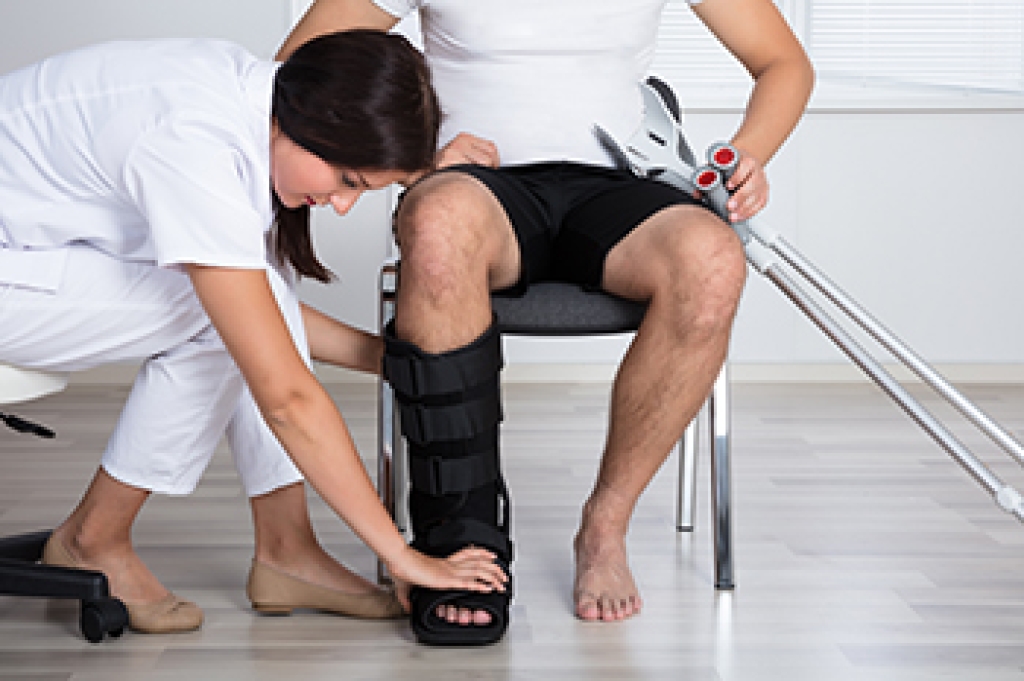
Walking Boots for Foot and Ankle Injuries

Walking boots are an essential tool in the healing process for foot and ankle injuries, offering critical support and protection. Walking boots are designed to immobilize the foot and ankle, which helps reduce movement and prevent further injury, creating an optimal environment for recovery. The rigid structure of the boot, typically made from materials like plastic or fiberglass, stabilizes the injured area and limits motion. Adjustable straps ensure a snug and secure fit, preventing unnecessary shifting of the foot. By distributing weight evenly, walking boots reduce pressure on the injured areas, minimizing strain and discomfort. Additionally, the boots protect the injured foot from external impacts and bumps, which is especially important during the early stages of recovery. A podiatrist can help guide the use of a walking boot, ensuring proper fit and duration for optimal healing. If you have injured your ankle, it is suggested that you schedule an appointment with a podiatrist for safe and effective care.

If you are having discomfort in your feet and would like to try orthotics, contact Dr. Christine Quinn from New Jersey. Our doctor can provide the care you need to keep you pain-free and on your feet.

What Are Orthotics?

Orthotics are inserts you can place into your shoes to help with a variety of foot problems such as flat feet or foot pain. Orthotics provide relief and comfort for minor foot and heel pain but can’t correct serious biomechanical problems in your feet.

Over-the-Counter Inserts

Orthotics come in a wide variety of over-the-counter inserts that are used to treat foot pain, heel pain, and minor problems. For example, arch supports can be inserted into your shoes to help correct overarched or flat feet, while gel insoles are often used because they provide comfort and relief from foot and heel pain by alleviating pressure.

Prescription Orthotics

If over-the-counter inserts don’t work for you or if you have a more severe foot concern, it is possible to have your podiatrist prescribe custom orthotics. These high-quality inserts are designed to treat problems such as abnormal motion, plantar fasciitis, and severe forms of heel pain. They can even be used to help patients suffering from diabetes by treating foot ulcers and painful calluses and are usually molded to your feet individually, which allows them to provide full support and comfort.

If you are experiencing minor to severe foot or heel pain, it’s recommended to speak with your podiatrist about the possibilities of using orthotics. A podiatrist can determine which type of orthotic is right for you and allow you to take the first steps towards being pain-free.

If you have any questions, please feel free to contact our office located in Basking Ridge, NJ, near Warren, Stirling, and Bedminster . We offer the newest diagnostic and treatment technologies for all your foot care needs.
Read more about Ankle Foot Orthotics for Athletes

Finding Relief from Arthritis in the Feet and Ankles

Arthritis in the feet and ankles can cause stiffness, swelling, and pain that affects daily mobility and overall quality of life. The joints most often affected include the toes, midfoot, and ankle, making walking or standing difficult. Relief begins with gentle exercises to maintain joint function and flexibility, along with weight loss to reduce pressure on the joints. Supportive footwear with cushioning and stability can also ease discomfort. A podiatrist can evaluate your specific condition and provide personalized treatment, which may include custom orthotics, medication, or advanced therapies. If arthritis is limiting your movement, it is suggested that you consult a podiatrist who can provide effective relief tips for arthritic feet and ankles.

Arthritis can be a difficult condition to live with. If you are seeking treatment, contact Dr. Christine Quinn from New Jersey. Our doctor can provide the care you need to keep you pain-free and on your feet.

Arthritic Foot Care  

Arthritis is a term that is commonly used to describe joint pain.  The condition itself can occur to anyone of any age, race, or gender, and there are over 100 types of it.  Nevertheless, arthritis is more commonly found in women compared to men, and it is also more prevalent in those who are overweight. The causes of arthritis vary depending on which type of arthritis you have. Osteoarthritis for example, is often caused by injury, while rheumatoid arthritis is caused by a misdirected immune system.

Symptoms

  • Swelling
  • Pain
  • Stiffness
  • Decreased Range of Motion

Arthritic symptoms range in severity, and they may come and go. Some symptoms stay the same for several years but could potentially get worse with time. Severe cases of arthritis can prevent its sufferers from performing daily activities and make walking difficult.

Risk Factors

  • Occupation – Occupations requiring repetitive knee movements have been linked to osteoarthritis
  • Obesity – Excess weight can contribute to osteoarthritis development
  • Infection – Microbial agents can infect the joints and trigger arthritis
  • Joint Injuries – Damage to joints may lead to osteoarthritis
  • Age – Risk increases with age
  • Gender –Most types are more common in women
  • Genetics – Arthritis can be hereditary

If you suspect your arthritis is affecting your feet, it is crucial that you see a podiatrist immediately. Your doctor will be able to address your specific case and help you decide which treatment method is best for you.

If you have any questions please feel free to contact our office located in Basking Ridge, NJ, near Warren, Stirling, and Bedminster . We offer the newest diagnostic tools and technology to treat your foot and ankle needs.

Read more about How to Care for Your Arthritic Foot

Seeking Podiatric Care for Sesamoiditis

Sesamoiditis is an inflammation of the small sesamoid bones located beneath the big toe joint, which help with weight-bearing and movement. This condition is often caused by repetitive pressure, high-impact activities, or wearing thin-soled or high-heeled shoes. Risk factors include participation in sports, such as running, basketball, or dance, having high arches, or engaging in activities that place continuous stress on the forefoot. Symptoms include pain beneath the big toe joint, swelling, bruising, and discomfort when walking or bending the toe. A podiatrist can provide a thorough evaluation, recommend rest, footwear modifications, custom orthotics, and other treatments for relief. If you are experiencing persistent forefoot pain, it is suggested that you schedule an appointment with a podiatrist for an accurate diagnosis and appropriate treatment solutions.

Sesamoiditis is an unpleasant foot condition characterized by pain in the balls of the feet. If you think you’re struggling with sesamoiditis, contact Dr. Christine Quinn of New Jersey. Our doctor will treat your condition thoroughly and effectively.

Sesamoiditis

Sesamoiditis is a condition of the foot that affects the ball of the foot. It is more common in younger people than it is in older people. It can also occur with people who have begun a new exercise program, since their bodies are adjusting to the new physical regimen. Pain may also be caused by the inflammation of tendons surrounding the bones. It is important to seek treatment in its early stages because if you ignore the pain, this condition can lead to more serious problems such as severe irritation and bone fractures.

Causes of Sesamoiditis

  • Sudden increase in activity
  • Increase in physically strenuous movement without a proper warm up or build up
  • Foot structure: those who have smaller, bonier feet or those with a high arch may be more susceptible

Treatment for sesamoiditis is non-invasive and simple. Doctors may recommend a strict rest period where the patient forgoes most physical activity. This will help give the patient time to heal their feet through limited activity. For serious cases, it is best to speak with your doctor to determine a treatment option that will help your specific needs.

If you have any questions, please feel free to contact our office located in Basking Ridge, NJ, near Warren, Stirling, and Bedminster . We offer the newest diagnostic and treatment technologies for all your foot care needs.

Read more about Sesamoiditis

Grades and Types of Ankle Sprains

An ankle sprain occurs when one or more of the ligaments supporting the ankle are stretched or torn,  often from a sudden twist or awkward landing. Because the ankle joint is small yet bears significant force with each step, it is especially prone to injury. The most common type of ankle sprain, known as an inversion sprain, happens when the foot rolls inward, straining the ligaments on the outside of the ankle. Less common are eversion sprains, which occur when the ankle rolls outward. Sprains are classified by severity. A grade I sprain involves mild pain with minimal ligament damage. A grade II sprain causes moderate pain with partial tearing and some looseness of the joint, and a  grade III sprain results in severe pain with complete tearing of ligaments and marked joint instability. Beyond pain, symptoms include swelling, bruising, limited movement, and difficulty bearing weight. A podiatrist can evaluate the extent of the injury, and recommend appropriate treatment. If you have sprained an ankle, it is suggested that you visit a podiatrist for an exam and treatment options.

Ankle sprains are common but need immediate attention. If you need your feet checked, contact Dr. Christine Quinn from New Jersey. Our doctor can provide the care you need to keep you pain-free and on your feet.

How Does an Ankle Sprain Occur?

Ankle sprains take place when the ligaments in your ankle are torn or stretched beyond their limits. There are multiple ways that the ankle can become injured, including twisting or rolling over onto your ankle, putting undue stress on it, or causing trauma to the ankle itself.

What Are the Symptoms?

  • Mild to moderate bruising
  • Limited mobility
  • Swelling
  • Discoloration of the skin (depending on severity)

Preventing a Sprain

  • Wearing appropriate shoes for the occasion
  • Stretching before exercises and sports
  • Knowing your limits

Treatment of a Sprain

Treatment of a sprain depends on the severity.  Many times, people are told to rest and remain off their feet completely, while others are given an air cast. If the sprain is very severe, surgery may be required.

If you have suffered an ankle sprain previously, you may want to consider additional support such as a brace and regular exercises to strengthen the ankle.

If you have any questions please feel free to contact our office located in Basking Ridge, NJ, near Warren, Stirling, and Bedminster . We offer the newest diagnostic tools and technology to treat your foot and ankle needs.

Read more about Ankle Sprains

Connect With Us